[Editor's note: The following contains spoilers for Malignant.]
Anyone familiar with the concept of a "blank check" movie will realize how Malignant came to be. James Wan made Warner Bros. a cool billion dollars between Aquaman and The Conjuring franchise, the type of success that grants a filmmaker a whole heck of a lot of freedom on their next project, freedom that Wan went ahead and used to make the most batshit studio horror film in at least the last decade. Giallo-inspired and delightfully gruesome, Malignant, co-written with Akela Cooper (Hell Fest), unfolds like something you'd find at the back of your local video rental shop in 1986, a cheeky B-movie with the polished action of a director who's dipped into both the DC and Fast & Furious universes. While it's not really necessary to "explain" what happens in the film's truly wild third act—the movie itself takes great pains to do that—it's absolutely worth it to discuss why it matters that the end stretch of Malignant is so wonderfully, unabashedly out of its mind.
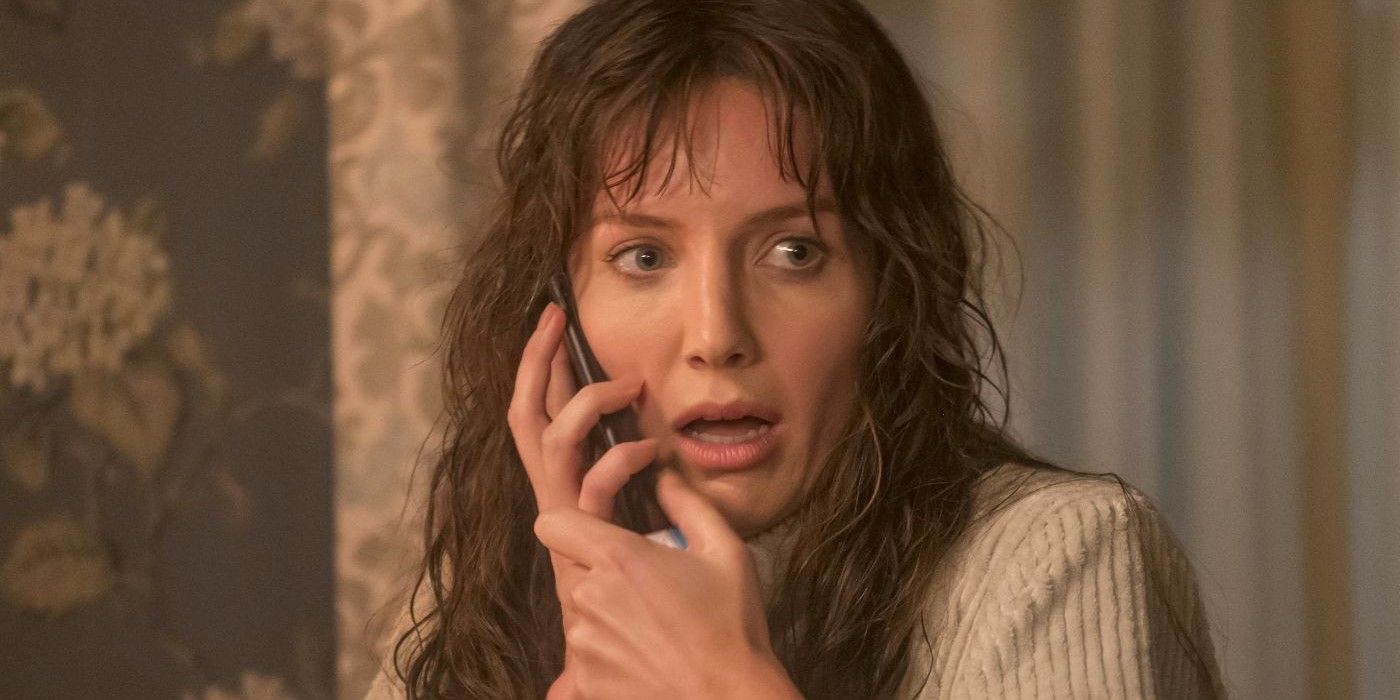
Here, to the best of my abilities, is a summary: Throughout Malignant, Maddie Mitchell (Annabelle Wallis) has been seeing visions of horrific murders being carried out by a ghoul named Gabriel, a specter who moves like a janky scarecrow and can only communicate by broadcasting his thoughts into nearby electrical equipment. Eventually, Maddie discovers that "Gabriel" is the name of the imaginary friend she had a child, the one who told her to do awful things to her unborn sister, the one that her parents waved away as the figment of a very troubled child's imagination. (Maddie was adopted, having been surrendered to a research institution as a baby.) Despite Wan's electric stylization, Malignant seems to be barreling toward a conclusion we've seen before: That "Gabriel" is just another part of Maddie's personality, forcing her to kill against her will.
The big reveal is kind of that, but also…wildly, aggressively not that. Searching through the archives of the abandoned research center, Maddie's sister, Sydney (Maddie Hasson) discovers Maddie was born with a living parasitic tumor—an "extreme version of teratoma," according to Dr. Florence Weaver (Jaqueline McKenzie)—attached to her body and brain, sentient enough to whisper thoughts in her head and, occasionally, control her body. Doctors did their best to remove Gabrielle, but a fraction of the tumor had to stay adhered to Maddie's brain to keep her alive. Decades later, a horrifying physical confrontation with her abusive husband, Derek (Jake Abel) jostles that fraction awake again, sending Gabrielle on a rampage against every doctor and family member who tried to subdue him. To be clear, this tumor is physically hijacking Maddie's body; every time we see "Gabrielle" in Malignant, he's moving so strangely because it is Maddie moving backward, Gabriel's deformed tumor face peeking out from beneath her skull.
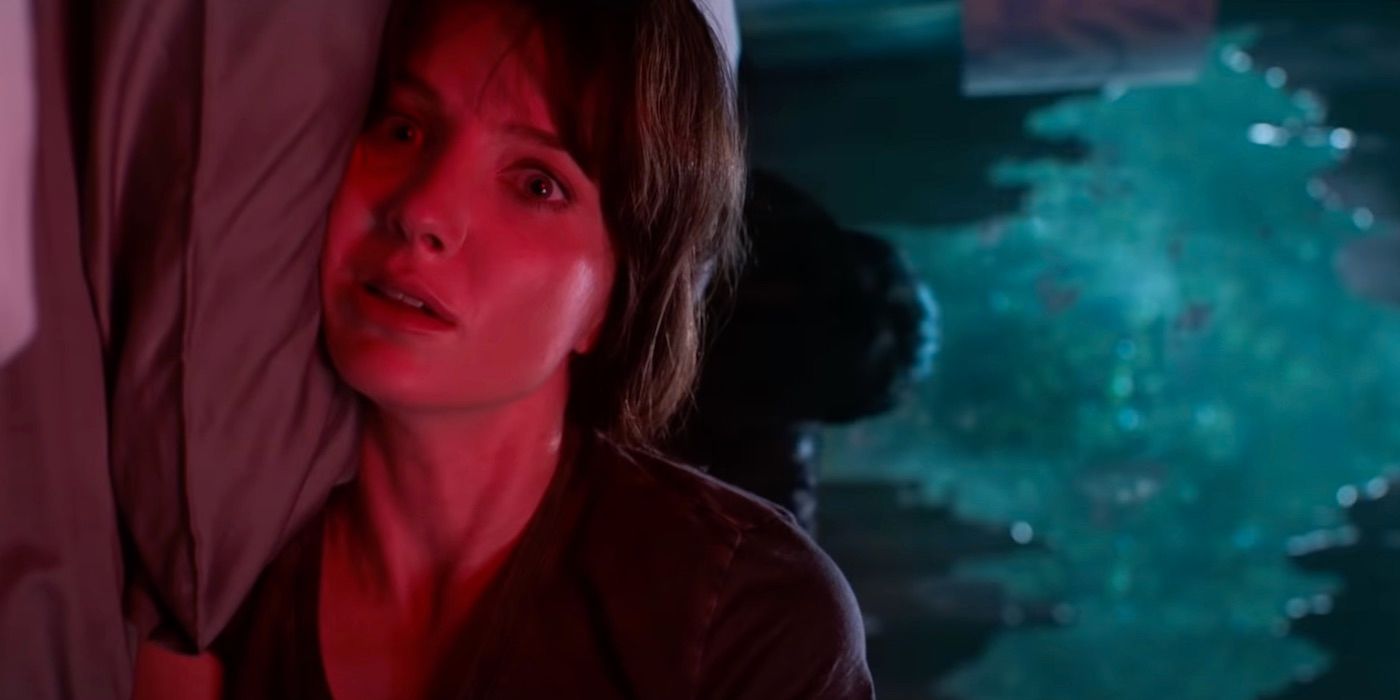
Wan fully shows his cards in arguably the wildest mainstream horror set-piece in years. Confined to a cell in the police precinct, Maddie runs afoul of a few fellow inmates, triggering Gabriel to, and I cannot stress this enough, burst out the back of Maddie's skull. With her monstrous sibling in full control, Maddie reverses, the woman's face hanging limply from the back of a body where the elbows don't bend quite right and the feet move forward and backward simultaneously. The ensuing slaughter, in which Gabriel massacres everyone in the cell and every cop in the building, is a masterclass in riding that razor-thin line between horrifying and hilarious. Wan utilizes the frenetic Steadicam action he put to use on Aquaman to frame Gabriel as he skitters and flips from kill to kill, like some kind of circus monster in a Tim Burton daydream. It is grotesque, it is nauseating, and it is very, very funny, and to suggest Wan and company weren't fully aware of what they were putting on screen is to not understand the ways the best horror and humor go hand in hand. It's all build-up and release
Throughout the entirety of Gabriel's third-act rampage, I thought of what Wan said in the second trailer for Malignant, which, having now seen the movie, feels like Warner Bros. prepping people as best they could. "You gotta take chances, Wan said. "If you don’t, you end up making the same old thing again and again. I think audiences are starved for something that’s new and different."
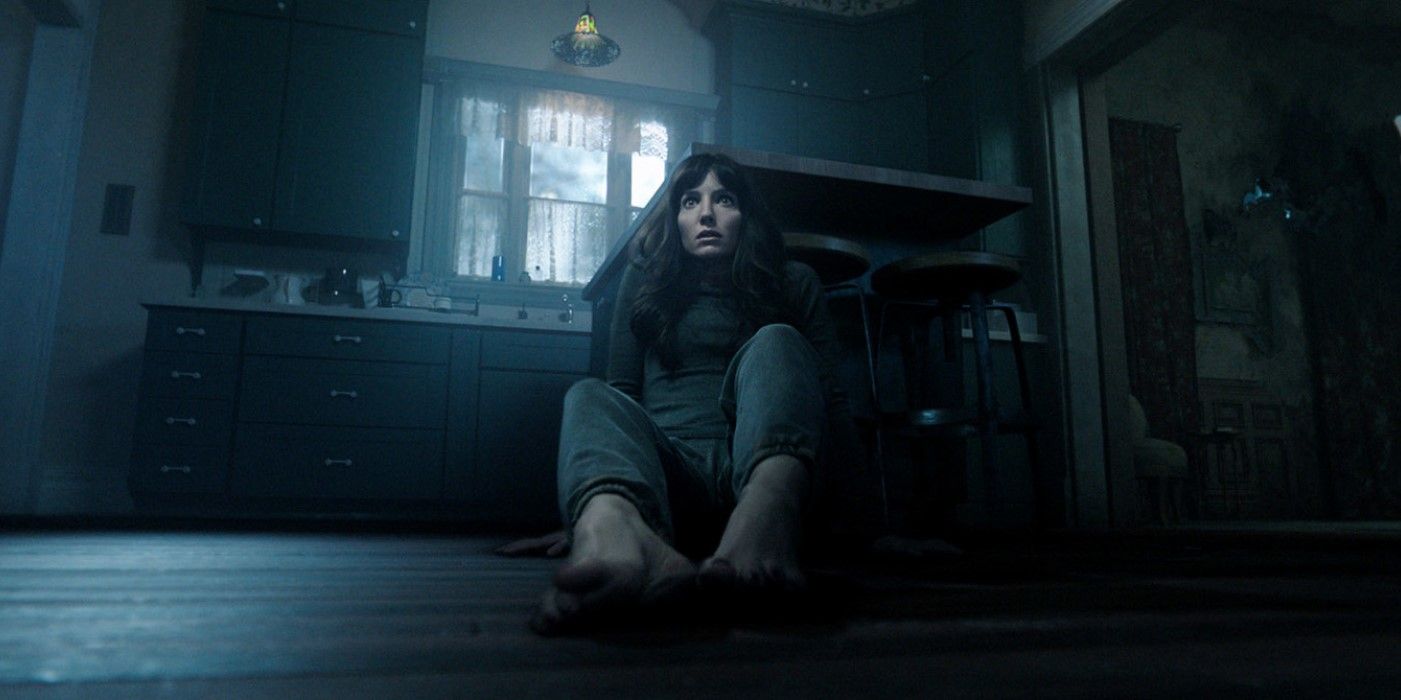
And what that made me think of was The Conjuring: The Devil Made Me Do It, which is unfortunate, because The Conjuring: The Devil Made Me Do It is terrible. The third installment of the series Wan started back in 2013 is mainstream horror on autopilot. There's no inventiveness to the film; it's primarily director Michael Chaves doing a James Wan cover song. We already forget that what made the first Conjuring film (and Insidious three years before it) feel so inventive was the fact it harkened back to an old-school style of scare—bumps in the night, creaky floorboards, flickering lights—that hadn't been in style for years. The Conjuring was such a success that it became the style, and like anything that can be franchised into the ground, that style became boring again. Which is why there must always be room in the horror landscape for something like Malignant, which takes a gigantic swing that looks nothing like anything else out there, especially at that studio level. The movie is that rare original idea that audiences are going to want to discuss (see: scream about) for reasons completely unrelated to franchise potential. In that way, James Wan—and, even with far fewer films to his name, Jordan Peele—is occupying the role previously held by the late, great Wes Craven, who knew better than anyone when a style or format had run its course and the entire genre needed to pivot once again.
Of course, Malignant does itself open to serialization. Maddie's victory over Gabriel doubles as the end of her personal arc; she realizes that despite an abusive marriage and a literal parasite attached to her brain, her body has only ever belonged to her, and any strength Gabriel gave her was also her own. Gabriel ends the film locked inside a mind prison—look, the movie's weird—but his eventual return is all but stated outright. But the hypothetical future filled with sequels shouldn't lessen the film we have right now, a beautifully trashy supernatural slasher that revels in its low-budget splatter roots, released by a major studio. That's a win.
Source link
More Stories
Donald Trump is back to being besties with his North Korean pal – We Got This Covered
‘Dark Winds’ Seasons 3-4 Get Netflix Release Date Update
Brutal Red‑Band Clip Confirms THE LONG WALK